If you’re considering liposuction, you may wonder: What Layer of Fat Is Removed During Liposuction? Does the procedure remove all the fat under your skin, or does it target a specific layer?
The short answer is that liposuction primarily removes subcutaneous fat, the soft fat located directly beneath the skin and above the deeper tissues. It doesn’t remove visceral fat, the deeper abdominal fat surrounding internal organs.
This distinction matters when considering Liposuction in Islamabad, because the procedure is designed for body contouring rather than general weight loss. Understanding which fat can and can’t be treated helps you develop realistic expectations before surgery.
Understanding the Fat Layers Under Your Skin
Your body contains several types of tissue between the skin and internal organs. In simple terms, you can think of the abdominal area as having:
- Skin – the outer covering of the body.
- Subcutaneous tissue – the layer beneath the skin that contains fat.
- Muscle and fascia – deeper structural tissues.
- Visceral fat – fat stored inside the abdominal cavity around organs.
Subcutaneous fat is the type you can generally pinch between your fingers. It provides insulation, cushioning, and energy storage.
Liposuction targets selected deposits within this subcutaneous layer.
Subcutaneous Fat vs. Visceral Fat
| Type of fat | Where it is located | Can liposuction remove it? |
| Subcutaneous fat | Directly beneath the skin | Yes, this is the primary target |
| Visceral fat | Around internal abdominal organs | No |
| Deep structural tissues | Beneath the fat layer | No |
Visceral fat cannot be safely reached with a standard liposuction cannula. It’s also metabolically different from the superficial fat that creates localized bulges. Lifestyle-based weight management and appropriate medical care are used to address excess visceral fat instead.
Does Liposuction Remove the Entire Fat Layer?
No, and it shouldn’t.
A skilled surgeon doesn’t simply remove as much fat as possible. The objective is to selectively reduce excess fat while preserving enough tissue to maintain natural contours, blood supply, and a smooth appearance.
The superficial fat layer contains fibrous structures that help support the skin. Aggressively suctioning very close to the skin can increase the risk of contour irregularities, dimpling, and other unwanted changes.
This is one reason surgical experience matters. Good liposuction is about controlled contouring, not simply maximizing the amount of fat removed.
How Does Liposuction Remove Subcutaneous Fat?
During liposuction, the surgeon makes small incisions and introduces a thin tube called a cannula into the targeted fatty tissue.
Depending on the technique, fluid may first be introduced to help reduce bleeding and discomfort. The cannula is then moved through the fat, and a suction device removes the selected fat cells.
A simplified process looks like this:
1. Consultation and Assessment
The surgeon examines your body shape, skin quality, fat distribution, medical history, and expectations.
2. Treatment Planning
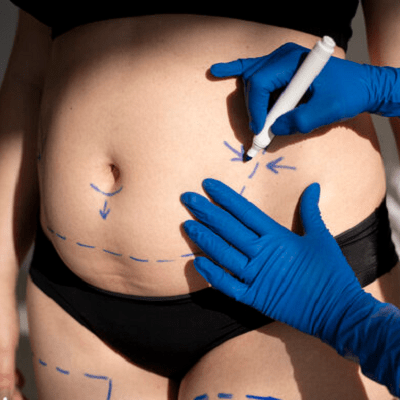
The areas to be treated are carefully marked. Common areas include the abdomen, hips, thighs, arms, chin, neck, and other localized fat deposits.
3. Anesthesia and Preparation
An appropriate form of anesthesia is used, and the treatment area is prepared according to the surgical plan.
4. Fat Removal
The cannula is inserted through small incisions and used to remove selected subcutaneous fat.
5. Recovery and Compression
After surgery, swelling and bruising are common. Your surgeon may recommend a compression garment to help control swelling and support the treated contours during healing.
What Areas Can Be Treated?
Because liposuction targets localized subcutaneous fat, it can be used in several areas where stubborn deposits remain despite healthy lifestyle habits.
Common treatment areas include:
- Abdomen
- Waist and love handles
- Hips
- Inner and outer thighs
- Upper arms
- Chin and neck
- Back
- Knees
- Buttocks
- Chest in selected cases
The best area for treatment depends on your anatomy and the amount and location of excess fat.
For someone researching Liposuction Surgery in Islamabad, the important question isn’t simply how many areas a clinic can treat. It’s whether the surgeon can identify which areas would genuinely benefit from contouring.
Who Is a Good Candidate for Liposuction?
Liposuction tends to be most appropriate for people who are relatively close to their desired weight but have localized subcutaneous fat deposits that don’t respond adequately to diet and exercise.
A suitable candidate generally has:
- Relatively stable body weight
- Localized fat pockets
- Reasonably good skin elasticity
- Realistic expectations
- Good general health
- A willingness to follow recovery instructions
Liposuction isn’t generally considered a treatment for obesity or a substitute for healthy weight management.
When Liposuction May Not Be the Right Choice
Liposuction may not be suitable if your primary concern is:
- Significant overall excess weight
- Predominantly visceral abdominal fat
- Very loose skin
- Certain uncontrolled medical conditions
- Unrealistic expectations about weight loss
- A desire to eliminate cellulite completely
For example, someone with a firm, protruding abdomen caused largely by visceral fat may not achieve the result they expect from abdominal liposuction.
Similarly, liposuction removes fat but doesn’t directly remove loose skin. If significant skin laxity is present, another body-contouring procedure may need to be discussed.
Does Removing Subcutaneous Fat Mean You Can’t Gain Weight Again?
No.
Liposuction permanently removes some fat cells from the treated area, but it doesn’t prevent future weight gain. Remaining fat cells can enlarge, and fat can accumulate in other parts of the body if calorie intake consistently exceeds energy needs.
That’s why maintaining a stable weight after surgery is important for preserving your contour.
What Results Can You Expect?
The goal of liposuction is body contouring, not dramatic weight reduction.
You may notice a change in the treated area’s shape once the initial swelling begins to settle, but final results take time. Your outcome depends on factors such as:
- Amount and location of fat removed
- Skin elasticity
- Surgical technique
- Number of areas treated
- Healing response
- Weight stability after surgery
A realistic consultation should focus on improved proportions and contours rather than promising a particular number on the weighing scale.
Recovery and Aftercare
Following your surgeon’s instructions is an important part of achieving a smooth recovery.
Depending on your procedure, you may be advised to:
- Wear compression garments as directed
- Keep incision sites clean
- Take prescribed medications appropriately
- Avoid strenuous exercise until cleared
- Attend scheduled follow-up appointments
- Maintain a stable, healthy diet
- Gradually return to normal activity
Swelling, bruising, tenderness, and soreness are common during recovery. Severe or persistent pain, fever, significant wound drainage, chest pain, or breathing difficulties require prompt medical attention.
Common Mistakes People Make Before Liposuction
Choosing a surgeon based only on price
The cheapest option isn’t necessarily the safest or most appropriate. Surgical qualifications, experience, facility standards, and follow-up care deserve equal attention.
Expecting liposuction to remove visceral fat
It can’t. If the main concern is deep abdominal fat, liposuction isn’t the appropriate solution.
Assuming more fat removal means a better result
Over-removal can contribute to contour irregularities. Effective liposuction is about precision and proportion.
Ignoring skin quality
If skin elasticity is poor, removing underlying fat may leave loose or uneven-looking skin. Your surgeon should assess this before recommending treatment.
Treating liposuction as a weight-loss procedure
Liposuction is primarily a contouring procedure. It shouldn’t replace appropriate nutrition, physical activity, or medical weight-management strategies.
Choosing Liposuction in Islamabad
If you’re comparing providers such as ARB Clinic, look beyond before-and-after photographs and advertised prices.
Ask about:
- The surgeon’s qualifications and experience
- Where the surgery will be performed
- The anesthesia plan
- How your individual anatomy will be assessed
- Expected recovery time
- Potential complications
- Follow-up arrangements
- What happens if you’re not satisfied with the result
A good consultation should leave you understanding not only what can be removed, but also what should be left behind to create a safe and natural-looking contour.
Frequently Asked Questions
What Layer of Fat is Removed During Liposuction?
Liposuction primarily removes subcutaneous fat, which sits beneath the skin and above deeper tissues.
Does Liposuction Remove Visceral Fat?
No. Visceral fat surrounds the internal organs and isn’t accessible through standard liposuction.
Does Liposuction Remove all the Fat Under the Skin?
No. Surgeons selectively remove excess fat while preserving appropriate tissue for safe and natural contouring.
Is Liposuction Safe?
Liposuction is a commonly performed surgical procedure, but like any surgery, it carries risks. Appropriate patient selection, qualified surgical care, suitable facilities, and proper follow-up are important for reducing complications.
How Long Do Liposuction Results Last?
The fat cells removed during liposuction don’t simply grow back. However, remaining fat cells can enlarge with weight gain, so maintaining a stable weight helps preserve the result.
How Much Does Liposuction Cost?
The cost of Liposuction Surgery in Islamabad varies according to the treatment area, number of areas, surgical technique, anesthesia, facility, surgeon’s experience, and individual treatment plan. A personalized consultation is more useful than relying on a single advertised price.
Is Liposuction Worth it?
For someone with localized, diet-resistant subcutaneous fat and realistic expectations, liposuction can be an effective body-contouring option. It’s less appropriate when the primary concern is overall weight or visceral fat.
Final Thoughts
So, What Layer of Fat Is Removed During Liposuction? Primarily, it’s the subcutaneous fat located just beneath the skin, not the visceral fat surrounding your internal organs.
Understanding this difference is essential before considering liposuction. The procedure works best when there’s a localized fat pocket, adequate skin quality, and a realistic goal of improving body contours rather than achieving major weight loss.
If you’re considering Liposuction in Islamabad, take time to discuss your anatomy, expected results, risks, recovery, and alternatives with a qualified surgeon. Whether you consult ARB Clinic or another experienced provider, an informed decision should always come before the procedure itself.