

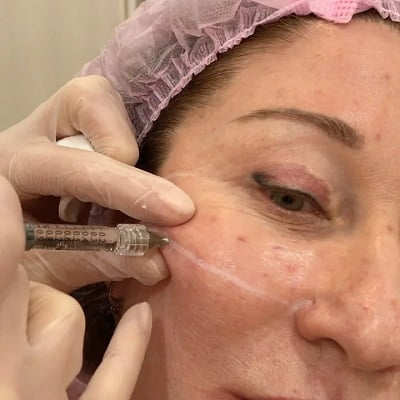
Most people hear the word “filler” and picture instant volume fuller lips, lifted cheeks, and smoother smile lines.
When people ask How is Sculptra Different From Other Facial Fillers?, the answer becomes clear right away: Sculptra works differently.
That’s actually why some patients love it, and others feel confused by it at first.
Unlike traditional facial fillers or standard Dermal Fillers that create immediate plumping, Sculptra focuses on stimulating your body’s own collagen production over time. The results are slower, subtler, and often more natural-looking when done well.
After seeing how different patients respond to injectable treatments, I’d say Sculptra tends to appeal to people who want gradual rejuvenation rather than obvious cosmetic changes overnight.
What Exactly Is Sculptra?
Sculptra is an injectable treatment made from poly-L-lactic acid (PLLA), a biocompatible substance that has been used medically for years.
Instead of acting like a gel that simply “fills” space under the skin, Sculptra works by encouraging collagen regeneration.
Collagen is the protein responsible for:
- Skin firmness
- Elasticity
- Structural support
As collagen declines with age, the face gradually loses volume and definition.
Sculptra aims to rebuild some of that lost support gradually.
How Traditional Fillers Work?
The most common facial fillers are hyaluronic acid (HA) fillers.
These include products commonly used for:
- Lips
- Under-eyes
- Nasolabial folds
- Cheek contouring
- Jawline shaping
HA fillers work by physically adding volume beneath the skin.
Results are often visible immediately after treatment, though swelling can temporarily affect appearance.
That instant gratification is one reason hyaluronic acid fillers became so popular.
The Biggest Difference: Gradual vs Instant Results
This is the key distinction many competitor articles oversimplify.
Traditional Fillers:
- Immediate volume
- Faster visible changes
- Often softer texture
- Easier to reverse if needed
Sculptra:
- Gradual collagen stimulation
- Results develop over weeks to months
- Longer-lasting improvement
- More subtle enhancement
Some patients initially think Sculptra “isn’t working” because they don’t walk out looking dramatically different.
That’s actually part of the design.
Why Some Patients Prefer Sculptra?
People often choose Sculptra because they want:
- Natural-looking rejuvenation
- Gradual anti-aging improvement
- Better skin thickness and quality
- Long-term collagen support
I’ve noticed patients in their late 30s to 50s often appreciate the softer transition.
Friends may comment that they look healthier or fresher without immediately assuming they had cosmetic work done.
That subtlety is one of Sculptra’s biggest advantages.
How Long Does Sculptra Last?
One reason interest in Sculpta Fillers in Islamabad has grown is longevity.
Traditional hyaluronic acid fillers often last:
- 6–18 months, depending on product and area
Sculptra results can sometimes last over two years because collagen remodeling continues after treatment.
That doesn’t mean it’s permanent, but longevity is definitely one of its strengths.
Sculptra Isn’t Ideal for Every Area:
This is something many blogs fail to explain properly.
Sculptra works best for:
- Cheek volume loss
- Temple hollowing
- General facial thinning
- Jawline support
- Overall facial rejuvenation
It’s not usually the first choice for:
- Lips
- Tear troughs
- Precise contour detailing
Traditional fillers still tend to perform better in those areas because they offer more controlled shaping.
What Competitor Articles Often Miss?
After reviewing top-ranking articles, I noticed several common problems.
Many pieces:
- Oversell “natural collagen stimulation” without explaining timing
- Ignore the importance of injector technique
- Don’t discuss patient suitability
- Fail to explain massage aftercare
- Underestimate the learning curve with Sculptra
Sculptra isn’t necessarily harder than other fillers, but it does require different planning and injection strategy.
That provider experience matters quite a bit.
The Recovery Process Is Different Too
With traditional fillers, swelling is usually the main short-term issue.
Sculptra recovery may involve:
- Mild swelling
- Temporary fullness
- Bruising
- Tenderness
Patients are often instructed to massage treated areas regularly for several days afterward.
That step helps distribute the product evenly beneath the skin.
At clinics like ARB Clinic, practitioners often explain upfront that Sculptra is more of a “process treatment” than a one-day transformation. That tends to create more realistic expectations and better patient satisfaction.
Can Sculptra Look More Natural?
In many cases, yes.
Because collagen builds gradually, facial changes tend to appear softer and less abrupt.
This can be especially useful for:
- Men want subtle rejuvenation
- Patients are nervous about looking overfilled
- People with generalized facial volume loss
That said, results still depend heavily on:
- Injection technique
- Product amount
- Facial anatomy
- Treatment planning
No injectable automatically guarantees natural results.
Is Sculptra Safe?
Generally, yes, when administered by experienced professionals.
Still, like all injectables, risks exist.
Possible side effects include:
- Bruising
- Swelling
- Nodules
- Uneven texture if improperly placed
This is why injector expertise matters so much with collagen stimulators.
Who Is a Good Candidate for Sculptra?
Sculptra may work well for people who:
- Want gradual improvement
- Have age-related facial volume loss
- Prefer longer-lasting treatments
- Don’t want an obvious filler appearance
Patients wanting dramatic, immediate contouring may prefer traditional fillers instead.
FAQ’s:
Is Sculptra Better than Hyaluronic Acid Fillers?
Not necessarily better, just different. Sculptra focuses on collagen stimulation, while HA fillers provide immediate volume.
How Long Does it Take to See Sculptra Results?
Results usually develop gradually over several weeks to months.
Does Sculptra Look Natural?
When done properly, many patients find Sculptra produces very natural-looking rejuvenation.
Can Sculptra Replace a Facelift?
No. Sculptra can improve facial volume and skin quality, but it doesn’t replace surgical lifting for significant sagging.
How Many Sculptra Sessions are Needed?
Many patients need multiple sessions depending on age, collagen loss, and treatment goals.
Final Thoughts!
So, How Is Sculptra Different From Other Facial Fillers?
The biggest difference is philosophy.
Traditional fillers mainly replace lost volume directly. Sculptra encourages your skin to rebuild support gradually through collagen stimulation.
That slower approach isn’t for everyone. Some people want immediate visible changes, and that’s completely understandable. But for patients looking for subtle, longer-term rejuvenation, Sculptra can be an incredibly interesting option when used thoughtfully.
At clinics like ARB Clinic, treatment planning is often based on matching the right injectable to facial anatomy and individual aging patterns rather than using a one-size-fits-all approach.
The best results usually happen when treatment goals, facial structure, and realistic expectations all align with the right injector experience.