You may have a tattoo you’ve outgrown, a design that didn’t turn out as expected, or a name you’d rather not see anymore. The good news is that modern tattoo removal can significantly fade and sometimes completely clear unwanted ink.
But How Effective Is Tattoo Removal?
The honest answer is: it can be highly effective, but complete removal isn’t guaranteed for every tattoo. Results depend on the tattoo’s colour, depth, age, size, location, your skin tone, the type of laser used, and how your skin responds to treatment.
Laser technology has become the leading professional approach to tattoo removal because it can target tattoo pigment while limiting damage to surrounding skin. However, successful removal is a gradual process rather than a one-session procedure.
How Effective Is Laser Tattoo Removal?
For many people, Laser Tattoo Removal can produce substantial fading over a series of treatments. Dark blue and black inks generally respond better than colours such as green, yellow and some shades of red. Certain white or flesh-coloured pigments can also be unusually difficult to treat because some pigments may darken when exposed to laser energy.
The important distinction is between significant fading and 100% removal.
A responsible clinic shouldn’t promise that every tattoo will disappear completely. Some tattoos leave a faint outline or residual pigment even after an appropriate treatment course.
The American Academy of Dermatology also notes that modern lasers have improved tattoo-removal effectiveness, but the skill and experience of the person performing the treatment remain important.
What Determines Your Results?
| Factor | Effect on removal |
| Ink colour | Black and dark blue often respond more readily |
| Ink density | Dense, heavily saturated tattoos can take longer |
| Tattoo size | Larger tattoos generally require more treatment time |
| Tattoo age | Older, faded tattoos may respond differently from fresh, dense ink |
| Tattoo location | Blood circulation and location can influence fading |
| Skin tone | Laser settings need to be carefully selected to protect surrounding skin |
| Ink depth/type | Professional and layered tattoos may be more challenging |
| Laser technology | Different wavelengths target different pigments |
| Aftercare | Proper healing helps reduce avoidable complications |
How Does Laser Tattoo Removal Work?
Tattoo ink is deposited in the deeper dermis of the skin, which is why it doesn’t simply disappear as the skin naturally renews itself.
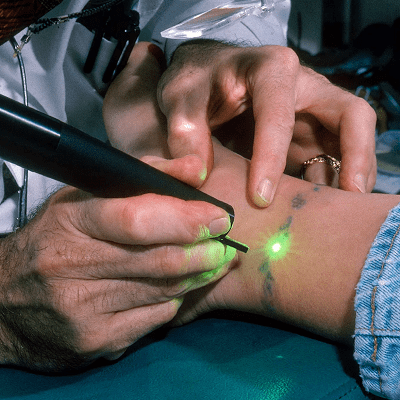
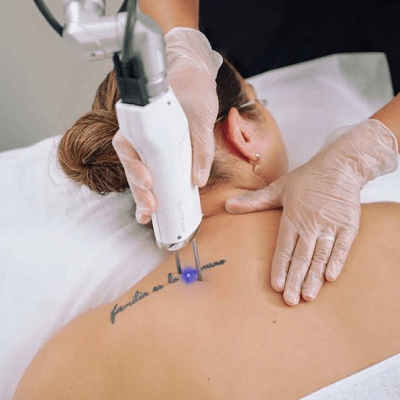
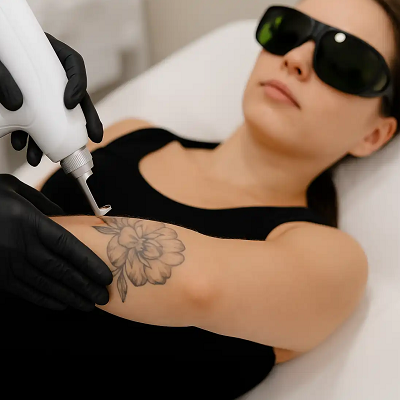
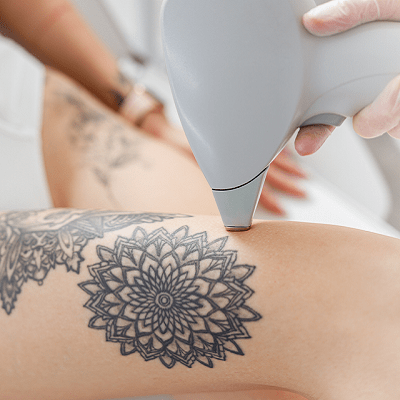
During laser tattoo removal, carefully selected laser energy is directed at the tattoo pigment. The energy breaks larger ink particles into much smaller fragments. Your body’s natural immune and lymphatic processes then gradually clear those fragments.
This is why you don’t see the final result immediately after treatment. The laser starts the process, but your body does much of the clearing between sessions.
What Happens During a Typical Treatment?
Consultation and assessment
A qualified professional examines the tattoo, your skin type, pigment colours, previous treatments and medical history.
Treatment planning
The appropriate laser wavelength and settings are selected according to the tattoo and your skin.
Laser treatment
Short pulses of laser energy target the tattoo pigment. You may feel a snapping or stinging sensation during treatment.
Healing period
Temporary redness, swelling, soreness, or other skin reactions can occur. The treated area needs time to heal.
Gradual fading
The tattoo continues fading during the weeks following treatment.
Further sessions
Additional treatments may be recommended after the skin has adequately recovered and the remaining pigment has been assessed.
How Many Sessions Does Tattoo Removal Take?
There is no universal number.
The FDA notes that tattoo removal can require several treatments and that complete removal may sometimes not be possible. Some professional sources commonly cite approximately 6–10 sessions, while more complex tattoos can require considerably more.
A small, lightly inked black tattoo may respond much faster than a large, dense, multicoloured professional tattoo.
One of the biggest mistakes is expecting dramatic changes after the first session. Tattoo removal is normally a progressive treatment, and the fading between sessions is an important part of the process.
Is Tattoo Removal Safe?
Laser tattoo removal can be safe when performed by an appropriately trained healthcare professional using suitable equipment and settings. However, it isn’t risk-free.
Possible side effects include:
- Redness and swelling
- Temporary soreness
- Changes in skin pigmentation
- Blistering or pinpoint bleeding
- Infection
- Scarring in some cases
The risk of complications can increase when treatments are performed incorrectly or when people attempt aggressive DIY removal.
This is particularly important for people with medium-to-deep skin tones, where inappropriate laser settings can increase the risk of unwanted pigmentation changes.
Who Is a Good Candidate?
You may be a suitable candidate if you:
- Have an unwanted or regretted tattoo
- Have realistic expectations about gradual fading
- Understand that multiple sessions may be required
- Are willing to follow aftercare instructions
- Have healthy skin in the treatment area
A consultation is especially important if your tattoo contains unusual colours, cosmetic pigments, scar tissue or previous tattoo-removal damage.
Treatment may need to be postponed or modified if you have an active skin infection, significant irritation, recent sunburn or other circumstances that could affect healing.
What About Tattoo Removal in Islamabad?
People searching for tattoo removal in Islamabad have more choices than ever, but the clinic you choose can make a meaningful difference.
Don’t select a provider based only on the lowest price or a claim that a tattoo can be removed in a fixed number of sessions.
Before committing, ask:
- What laser technology is being used?
- Who performs or supervises the procedure?
- How is the laser selected for different ink colours?
- How are darker skin tones managed?
- What results are realistic for my specific tattoo?
- What side effects should I expect?
- How long should I wait between treatments?
- What happens if the tattoo doesn’t completely clear?
At ARB Clinic in Islamabad, tattoo removal is offered using Pico Laser technology, with treatment planning based on tattoo characteristics and skin type. The clinic states that consultations include assessment of factors such as tattoo colour, size, depth and skin sensitivity.
That personalised assessment is worth prioritising. A laser device alone doesn’t determine the outcome; appropriate patient selection, settings, technique and aftercare all matter.
How Much Does Tattoo Removal Cost?
There isn’t one reliable price for tattoo removal.
The total cost can depend on:
- Tattoo size
- Number of sessions
- Ink colours
- Tattoo density
- Treatment technology
- Clinic and practitioner
- Complexity of the tattoo
Some Islamabad clinics publish per-session price ranges, but these shouldn’t be treated as a universal market rate. A personalised quotation after examining the tattoo is more meaningful than a generic advertised price.
When comparing prices, consider the total expected treatment course, not just the cost of one session.
What Should You Do After Tattoo Removal?
Good aftercare supports proper healing and helps reduce avoidable complications.
Your provider may recommend:
- Keeping the area clean
- Avoiding picking, scratching, or deliberately breaking blisters
- Protecting the treated skin from excessive sun exposure
- Following prescribed wound-care instructions
- Avoiding irritating skincare products on the area until advised
- Contacting the clinic if you develop unusual or worsening symptoms
Don’t judge the final outcome immediately after a session. Temporary inflammation can make the area look different before it settles.
Common Tattoo Removal Mistakes to Avoid
Expecting one session to erase the tattoo
Laser treatment works progressively. One treatment rarely tells you the final outcome.
Choosing a clinic solely because it’s cheaper
Poor technique can result in burns, pigmentation changes, or scarring. Correct treatment is more important than simply finding the lowest price.
Using tattoo-removal creams
The FDA has not approved tattoo-removal creams or DIY removal kits. These products generally cannot reach the deeper tattoo pigment and may cause burns, rashes, or scarring.
Treating too frequently
The skin needs time to heal, and the body needs time to clear fragmented pigment. Rushing sessions doesn’t necessarily mean faster removal.
Expecting every colour to respond equally
Different pigments absorb different laser wavelengths. A multicoloured tattoo may therefore require a more complicated treatment approach.
Is Tattoo Removal Worth It?
For someone who genuinely regrets a tattoo, laser removal can be worthwhile—particularly when the goal is substantial fading or preparing the area for a cover-up.
But it’s worth entering treatment with realistic expectations.
You may need multiple appointments; there can be discomfort and cost involved, and complete clearance isn’t guaranteed. The best decision comes from understanding your individual tattoo rather than relying on generic before-and-after photographs.
FAQs:
Does Tattoo Removal Really Work?
Yes. Professional laser tattoo removal can significantly fade many tattoos, and some tattoos can be cleared completely. However, results vary, and complete removal isn’t guaranteed.
Is Laser Tattoo Removal Painful?
It can be uncomfortable. Many people describe the sensation as repeated snapping or stinging against the skin. Your provider can discuss appropriate methods for managing discomfort.
How Long Do Tattoo Removal Results Last?
Once tattoo pigment has been successfully cleared, it doesn’t simply grow back. However, some residual pigment may remain if complete removal isn’t achieved.
Can a Tattoo be Completely Removed?
Sometimes, yes but not always. Tattoo colour, density, depth, skin characteristics and other factors can limit the final result.
How Many Treatments will I Need?
Many tattoos require several sessions, with commonly cited estimates around 6–10 treatments, but some need fewer and complex tattoos can require considerably more. Your treatment plan should be based on an individual assessment.
Is Tattoo Removal Safe for Darker Skin?
It can be performed safely with appropriate technology, settings, and professional supervision, but skin pigmentation needs to be considered carefully. A consultation is important before treatment.
Is Tattoo Removal Worth the Money?
For many people, yes, especially when removing an unwanted tattoo improves their confidence or allows a better cover-up. The value depends on your goals, expected number of sessions, and realistic likelihood of fading.
What Should I Expect Before and After Tattoo Removal?
Before treatment, expect a consultation and an assessment of your tattoo and skin. After treatment, temporary redness, swelling, or soreness may occur, gradually fading over the following weeks.
Final Thoughts: How Effective Is Tattoo Removal?
So, How Effective Is Tattoo Removal? Modern laser treatment can be highly effective, but the most trustworthy answer isn’t a guaranteed percentage or a promise of completely clear skin after a fixed number of sessions.
The best results come from matching the right laser approach to the tattoo, using appropriate settings, allowing enough time between treatments, and following professional aftercare.
If you’re considering tattoo removal in Islamabad, focus on the quality of the consultation and the experience of the practitioner rather than simply choosing the cheapest session or the fastest advertised result. A consultation at ARB Clinic can help you understand what to realistically expect from your tattoo removal journey and whether laser treatment is suitable for you.